Wednesday, January 7, 2009

Cupcakes?

I know there are things that are avaliable widely in Italy like Pan di Stelle cookies that aren't widely avaliable in Canada. But while flipping through the October issue of the Italian Cucina Italiana I was a little surprised to see this in the readers questions.


"Can you please explain to me what cupcakes are?"

Even though I am not big on eating deserts and cakes, Lori D is missing out on cupcakes.

And oh yeah, with the new year I promise to my three readers that I will post more. Even though the people who read this are the same people who I usually cook the food for anyways.

Saturday, December 6, 2008

Scallops with celery

Seafood is something I have always been a little weary of. That is, up until a few months ago.

I don’t remember eating a lot of seafood growing up; except for on Christmas Eve where it is just a feast of seafood, and since I was vegan/vegetarian for a good five years, I never really had a time to try it.

But more recently I have been trying to expand my knowledge of seafood. I started with scallops. Actually no, I started with a bottle of Viognier.

Over the past summer I decided it was time that my girlfriend and I started to venture down to Niagara wine country, see what wines Ontario has to offer a stones throw away.

On our first visit in July, we stopped by some of the more modern wineries like Stratus and Tawse and a few others, Pillitteri and Vineland Estates. The second time down, we wanted to try a few smaller wineries, so we tried Alvento.

The owners of Alvento, Bruno and Elyane Moos, keep the small winery running by themselves, with help from wine collector Morrie Neiss. The actual winery looks like a small house, located in the middle of some pear and apple trees and, of course, their vines.

The small tasting room is a lined with bottles of their wine, and a poster from the Teatro Alla Scala, the famous opera house in Milan, signed by one of the opera singers Sondra. Bruno said the poster was up because Sondra was the lead in that opera and they are naming one of their new wines after her.

Apart from wines, Alvento apparently also has some balsamic vinegar that that they have been aging at the winery that should be released soon that I am excited to try.

So, from that bottle of Viognier I decided we should have scallops for dinner.

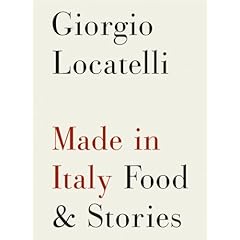
I chose to make them from Giorgio Locatelli’s Made in Italy book with a celeriac puree and celery.

This was not the only the first time I had made scallops, but also the first time I had worked with celeriac (celery root.)

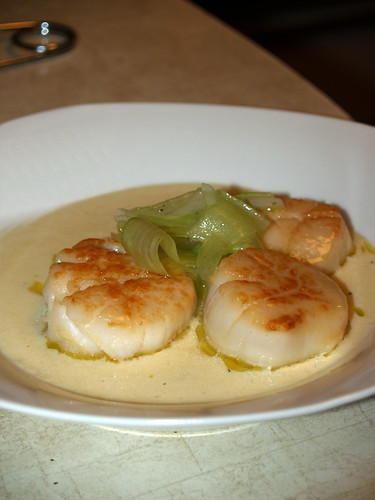
The celeriac was put in an over for 30 minutes with olive oil, water, rosemary, garlic and salt. Then it was pureed in the blender and pushed through a sieve to create a sauce that came out a little too thin, but perfect for the base of the scallops.

Using celery that was cut with a mandolin, not an easy task let me tell you I almost took off my palm trying to push the celery through the fine blade, it rested for 30 minutes in a bath of cold water and ice to crisp it. The celery slices were then mixed with a lemon vinaigrette.

In the book, Locatelli says to place the scallops in the oven after searing them on one side in a pan to make sure that they are fully cooked. When I made them I put half of them, my girlfriends, in the oven to make sure hers were fully cooked and just pan seared mine on both sides.

I found that even though they were in the oven for under a minute, they dried out too much and lacked the flavour and texture that mine had in the centre.

After the scallops were cooked they were dunked in a saffron vinaigrette and then plated on top of the celeriac puree with the celery strands on top of the scallops.

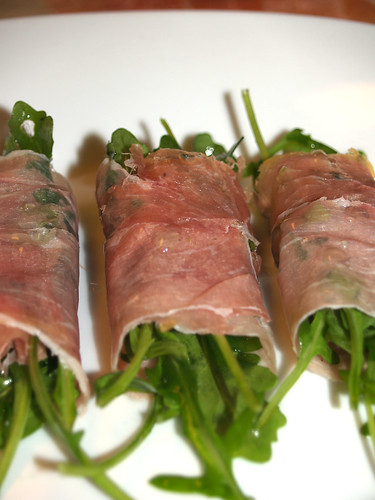
As an anti-pasto or apristomaco, we had prosciutto rolls with arugola. In the rolls was arugola with a simple lemon vinaigrette. I love these little rolls, they are the perfect little appetizer that has a little salty flavour from the prosciutto and the acidity form the lemon. On top, I drizzle a white truffle olive oil.

Combined with the Alvento Viognier the creamy scallops were great.

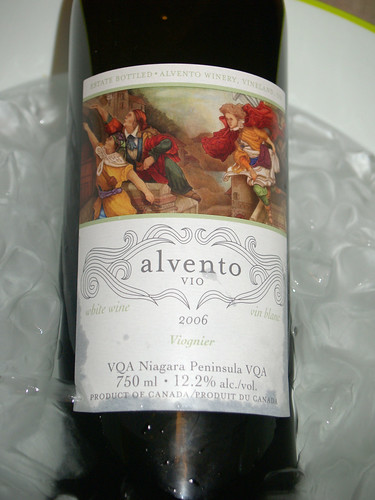
The Viognier had a nose of flowers and citrus, lemons and had a wonderful golden yellow colour.


Prosciutto rolls


Scallops with celeriac puree and celery


Alvento 2006 Viognier

Wednesday, December 3, 2008

Almond Biscotti

An espresso every morning, it does wonders. But, what goes with that short, strong, hot coffee? For me, nothing beats good, homemade biscotti.


The long, giant, rock hard ones sold in Starbucks, Second Cup and other coffee shops, to me, just don't cut it. I think a biscotti needs to be small, thin and although it is crispy on the outside, I like it a little softer on the inside.

I first remember eating biscotti, by the plateful, made by Nonna Natalina. Anytime we go over there, there is always some on the table or just coming out of the oven or freezer. Even without an espresso they always are the perfect snack to grab, and enjoy.

My favorite biscotti are simple almond ones. I like them hard and crispy, with a little Amaretto for flavour.


Almond Biscotti

1/3 Cup Butter

2/3 Cup Sugar

1 Teaspoon Baking Powder

1/2 Teaspoon Baking Soda

1 Cup Almond slivers/pieces

1 Teaspoon almond extract or 2 Teaspoons Amaretto

2 Eggs

2 1/2 Cups All-purpose Flour


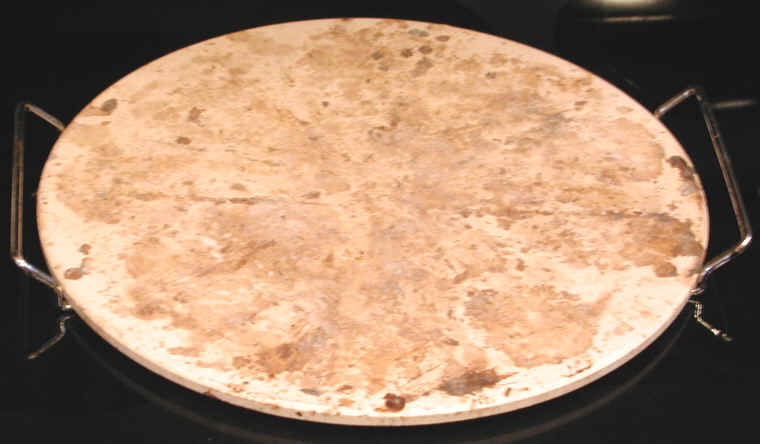
If you have a pizza stone, place it in a 375 degree oven now to warm it up.

In a large bowl, mix together butter and sugar until it becomes fluffy. Add the almond extract, backing powder and baking soda until they are all combined. Next, beat in the eggs. Next, beat in the flour and almond slivers/pieces.

Over turn the bowl onto a lightly floured surface and form the dough into two rolls, flattened on top. When forming the rolls, you would rather have them longer and a little thinner then a short thick roll, around 8 x 2 inch rolls.

Remove the pizza stone, if you are using one, and place each roll on the stone and put it in the over. If you aren’t using a pizza stone, place the rolls on a baking sheet. Cook for about 20 minutes. Remove them, and let them cool for a few minutes.

Turn the oven up to broil. Slice the rolls with a serrated knife, into slices about an inch thick. Lay them on a cooking sheet and broil them for a minute on each side, or until they get a nice, almost burned, top coat.


Take out and let them cool on a wire rack. Enjoy.

Tuesday, November 4, 2008

Spaghetti Carbonara

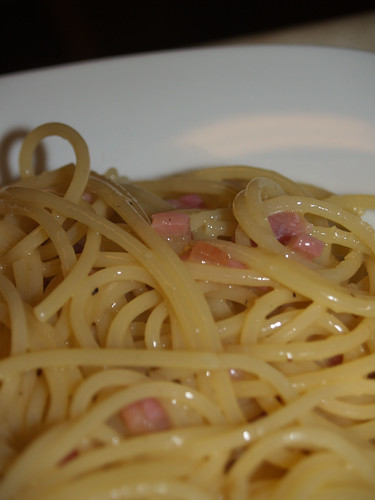
This pasta has always been my favorite pasta. From when I was a kid, it was always known as "Kyle's sauce" around my house. Some people get turned away with the idea of pasta in raw eggs, but I think people should try it.

many different versions of this show up a lot in restaurants and cook books, but many use cream and peas to make a thicker, hot sauce, where the one I like, and make, is room temperature eggs and pancetta. Simple, easy and fast. Enjoy.

Spaghetti Carbonara
Makes 4 portions


400g of spaghetti
4 large eggs
1/4 cup grated Parmigiano-Reggiano, plus extra for after
1/4 cup chopped pancetta
Salt
Pepper

Bring a large pot of water to a rolling boil and add a liberal amount of salt to it. I think most people don't add enough salt to pasta water. You want add enough salt so that the water tastes like the sea.

In a bowl, crack the eggs and stir them together, adding in the Parmigiano, and pepper, continually stirring with a fork until it is all mixed. Set aside.

Heat up a pan and add the pancetta, cooking for 2-5 minutes, until the pancetta cooks a little. set aside.

Once the water is boiling add the pasta and cook to the package directions or a little less to get a nice al dente pasta.

One the pasta is done, remove it from the water, and toss it in the egg and cheese mixture with the pancetta.

Serve right away and sprinkle more cheese on top.

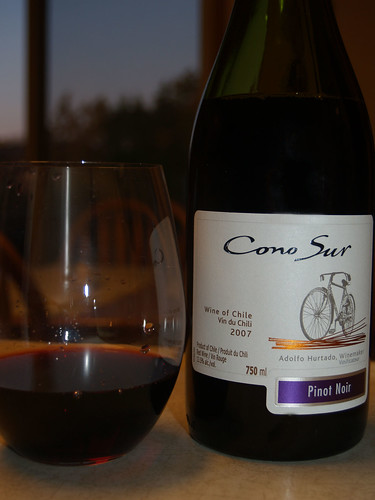
I went with a Pinot Noir from Chile, Cono Sur Pinot Noir.

Monday, November 3, 2008

Locatelli quote

I have been asked, numerous times, why I, a 21-year-old guy loves to be in the kitchen and cook so much? I generally give the same response, "I just enjoy making people smile and enjoying a meal with friends and family."

As I came home tonight, and sat down with the last of the Viognier in the fridge, I noticed the back cover of Giorgio Locatelli's Made In Italy book on my desk.

It reads:

"Italians just want to welcome people by sharing what they have, however simple, in abundance. An Italian's role in life is to feed people. A lot. We can't help it."

This summed up perfectly why I love to cook, why I bother reading cook books, magazines, blogs and message boards continuously. I do it to see people happy, smiling and enjoying themselves, in the presence of other friends and family, hoping that a new friendship can be made at that table that extends to them sharing their own kitchen and table with others.

Monday, October 20, 2008

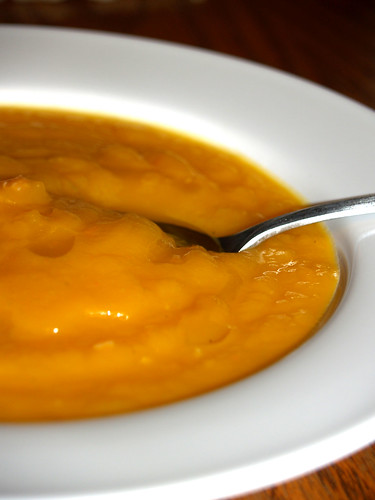
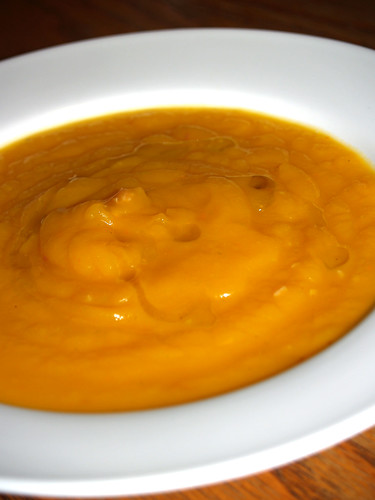
Roasted Butternut Squash Soup

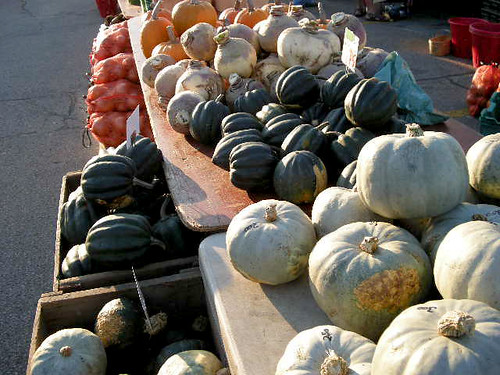
There is only one thing I like about the fall. Fall, to me, means it is the beginning of soup season. yes, to me, soup has a season and it officially began two weeks ago. Squash and pumpkin started to come up in the farmers markets, which to me makes an excellent reason to get one and make a thick soup. This soup can be served as an appetizer, or as a larger portion as a meal on its own to warm you up from the cold weather approaching.


Roasted Butternut Squash Soup

1 large butternut squash
1 cup chopped onions
1 cup chopped carrots
1 cup chopped celery
1 apple, peeled, cored and diced
Enough water (or veg. broth) to cover squash
Olive Oil
Salt
Pepper

Preheat oven to 350F.

Cut the ends off of the squash, cut the entire squash right down the center and using a spoon or ice cream scoop, take out all of the seeds. Coat the cut side of the squash with some olive oil and place the squash cut side down on a baking sheet. Bake for about 45 minutes, or until a sharp knife can easily penetrate the squash skin.

Just before the squash is ready, put a little olive oil in a large hot pot and sweat the onions, celery and carrots until the onions are clear, about 5-8 minutes.

Take the squash and peel off the skin and give it a rough dice, to cut it into smaller pieces. Peeling squash can be done in a few ways, if it was cooked long enough, the skin should peel right off when you pull on it. If it doesn't, I like to use a knife or peeler and cut/peel it. Add in the chunks of squash and apple into the onion mixture and cover it with water or broth. Bring it to a boil then turn it down to simmer, cover it half way and let it simmer for about an hour.

After the hour, take the pot off the heat and blend it together. There are a few ways you can do this using either a blender, food processor or hand blender. I prefer to use a food processor because my hand blender never seems to give me a smooth enough finish with chunks visible, and since the blender exploded last time, and i got second-degree burns, I'll stick with the food processor. Blend it all together, then place back into the pot. Season with salt and pepper, let it heat back up and enjoy.

I like to serve this with a drizzle of olive oil on top and a few pieces of day old crusty bread.

Saturday, October 18, 2008

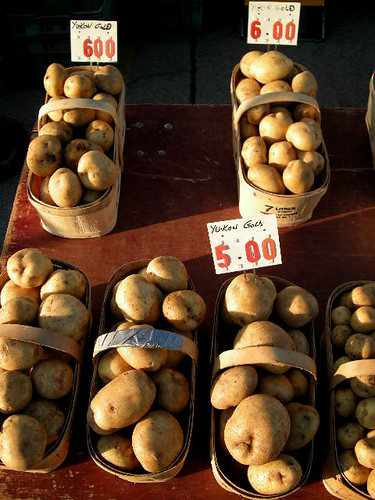
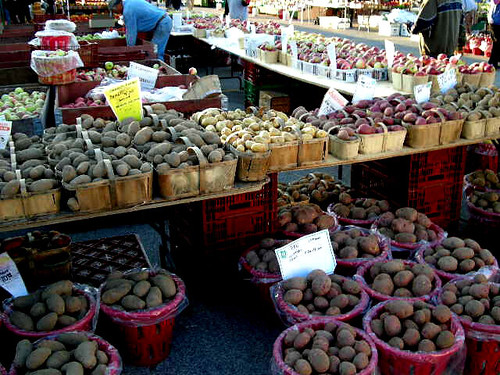
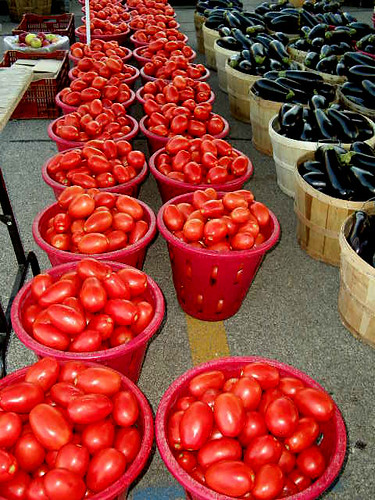
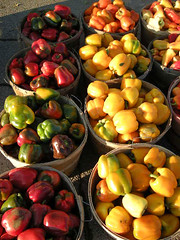
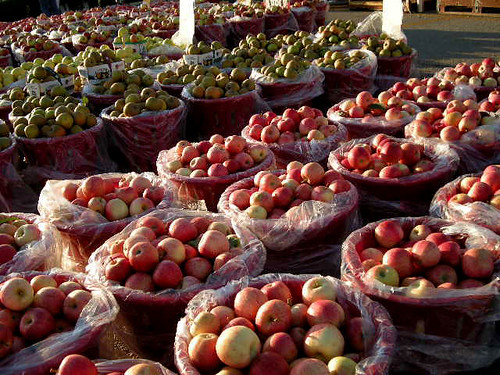
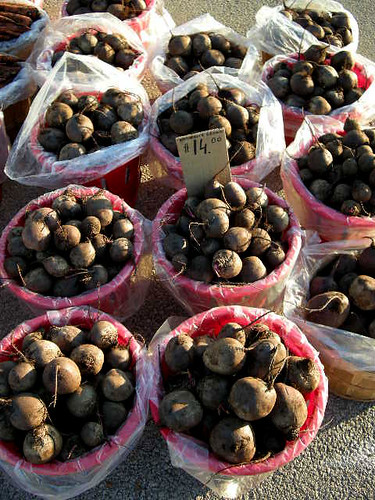
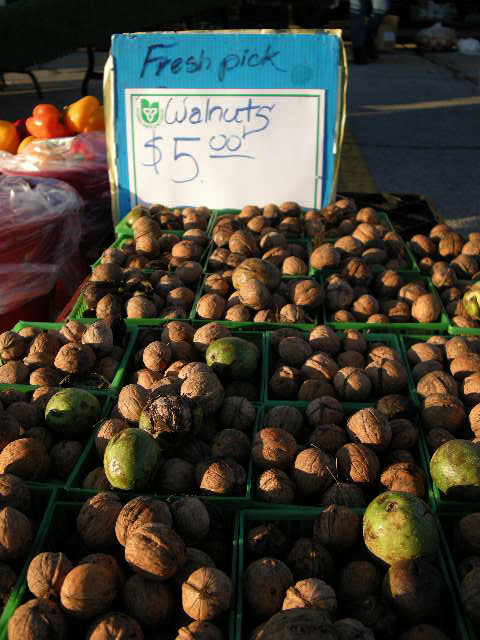
Sunday morning market

There is one thing that I look forward to every week. That is getting up early on Sunday morning and going down to the market. I have tried a few markets in the area and settled on going to the Square One parking lot market every Sunday. I chose this one because of its and wide array of fresh, usually local (which I will get into more below,) produce, bread and eggs. Although this is my first year going regularly to a market the friendliness of the sellers, and them always making you feel welcome, is what will definitely keep me coming back.

My only problem with the market are the three or four stand put up by people who I don't think grow what they sell, and are just picking up cases from the food terminal. As far as I know, and correct me if I am wrong, but pineapples don't grow in Ontario. Produce at a farmers market shouldn't have stickers on them with product numbers. Signs shouldn't have to be put up that say where the produce was grown, it should be that since it is a local farmers market the produce is from Ontario, most likely from Niagara, Beamsville, Caledon area. So I think that people who set up stalls should be forced to only sell locally farmed produce, since it is the reason most people go to a farmers market, to get fresh and locally farmed produce.


Friday, August 29, 2008

A perfect day

"In my dream world, everyone has an industrial deli slicer at home and spends half the day slicing prosciutto for their friends and the other half making lasagne."
Mario Batali

Saturday, August 23, 2008

The Omnivore's Hundred

Recently while visiting the long list of blogs that I frequent I came across the "Omnivores 100," 100 things that an omnivore should try in their life. The original list can be seen at the Very Good Taste blog.

The way it works is bolded items are ones I have already eaten and the crossed out ones are ones I would never eat.

The VGT Omnivore’s Hundred:

1. Venison
2. Nettle tea
3. Huevos rancheros
4. Steak tartare
5. Crocodile
6. Black pudding
7. Cheese fondue
8. Carp
9. Borscht
10. Baba ghanoush
11. Calamari
12. Pho
13. PB&J sandwich
14. Aloo gobi
15. Hot dog from a street cart
16. Epoisses
17. Black truffle
18. Fruit wine made from something other than grapes
19. Steamed pork buns
20. Pistachio ice cream
21. Heirloom tomatoes
22. Fresh wild berries
23. Foie gras
24. Rice and beans
25. Brawn, or head cheese
26. Raw Scotch Bonnet pepper
27. Dulce de leche
28. Oysters
29. Baklava
30. Bagna cauda
31. Wasabi peas
32. Clam chowder in a sourdough bowl
33. Salted lassi
34. Sauerkraut
35. Root beer float
36. Cognac with a fat cigar
37. Clotted cream tea
38. Vodka jelly/Jell-O
39. Gumbo
40. Oxtail
41. Curried goat
42. Whole insects
43. Phaal
44. Goat’s milk
45. Malt whisky from a bottle worth £60/$120 or more
46. Fugu
47. Chicken tikka masala
48. Eel
49. Krispy Kreme original glazed doughnut
50. Sea urchin
51. Prickly pear
52. Umeboshi
53. Abalone
54. Paneer
55. McDonald’s Big Mac Meal
56. Spaetzle
57. Dirty gin martini
58. Beer above 8% ABV
59. Poutine
60. Carob chips
61. S’mores
62. Sweetbreads
63. Kaolin
64. Currywurst
65. Durian
66. Frogs’ legs
67. Beignets, churros, elephant ears or funnel cake
68. Haggis
69. Fried plantain
70. Chitterlings, or andouillette
71. Gazpacho
72. Caviar and blini
73. Louche absinthe
74. Gjetost, or brunost
75. Roadkill
76. Baijiu
77. Hostess Fruit Pie
78. Snail
79. Lapsang souchong
80. Bellini
81. Tom yum
82. Eggs Benedict
83. Pocky
84. Tasting menu at a three-Michelin-star restaurant.
85. Kobe beef
86. Hare
87. Goulash
88. Flowers
89. Horse
90. Criollo chocolate
91. Spam
92. Soft shell crab
93. Rose harissa
94. Catfish
95. Mole poblano
96. Bagel and lox
97. Lobster Thermidor
98. Polenta
99. Jamaican Blue Mountain coffee
100. Snake

I pretty much eat anything, so there isn't anything on this list that I wouldn't eat. But, I think that the list is missing: a good steak Florentina, Lamb, fresh pasta made by hand, zucchini flowers, white truffles, real aged balsamic vinegar from Modena and grappa.

Friday, August 8, 2008

My Own Bakery

When I was younger and on vacation my mother and father would send my sister and I out to get fresh bread every morning. So out we would go, at 8 am, in the cold French or Swiss winter to walk down to the bakery to get two french sticks. The only thing was, my sister would usually eat half of the baguette on the short walk back from the bakery to the hotel, so we would have to get two or three for the day just so bread disposal (read: sister) could eat her baguette on the walk home.

The smell of fresh bread has always been on of my favorite scents. When it comes to bread, I usually went to the local bakery down the street from my house and got whichever loaf was freshest out of the oven, a slab of focaccia, and a Limonata for the ride home. But I started to hear about "no-knead" breads that take minutes to put together, and take no effort. I was always skeptical of this way of making bread and after a few months of putting it off I tried it.

I got the recipe from the New York Times. It is such a simple recipie that can be open to many interpretations.

I made the dough, as per the recipe and let it rise for two and a half hours. My first loaf I made plain, as the recipe directed, but lately I have been adding different spices and flavours to the dough.

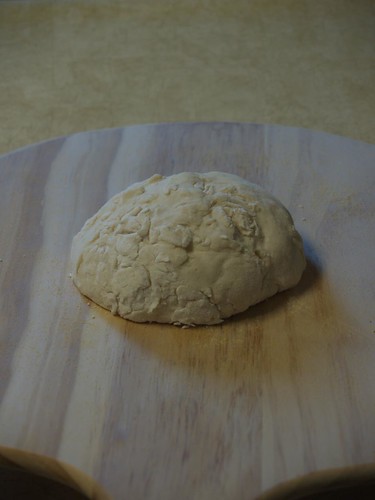
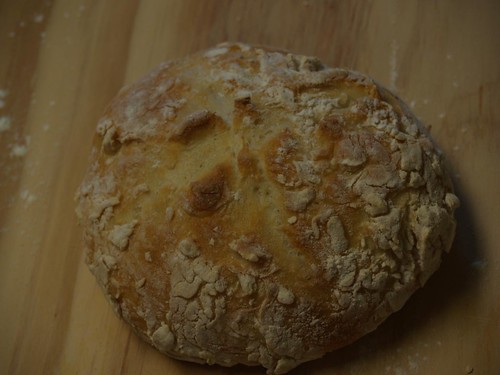
Here is the dough, I cut about a grapefruit sized chunk out of the bowl and lightly tossed it between my hands to form a circle and let it rest on a pizza peel with some corn meal on it for twenty minutes.

Once out of the over, and off of the pizza stone, I let it rest for five minutes.


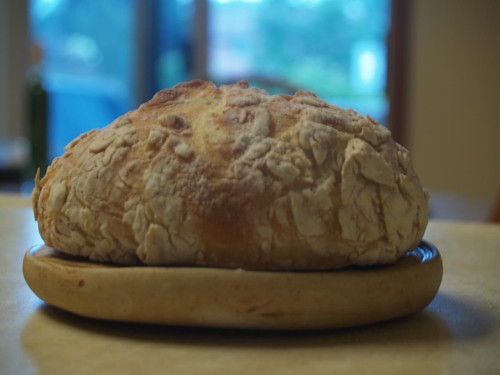
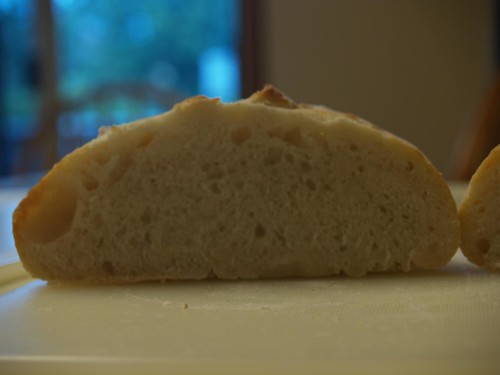
Here is the final product, a nice, crusty on the outside, soft on the inside, homemade bread that takes minutes to make, and is by far one of the easiest recipes I have ever made.

One variation I have done is right when I put the dough in the oven I put a few sprigs of rosemary on top of the dough. Next I will try with tossing some Herbs Du Provence on top and maybe some other flavours.

Although, the bread really doesn't need anything else with it besides a nice dollop of some good olive oil or a nice big piece of cheese.

Friday, July 25, 2008

Summer Recap

Although I haven't been writing on here for the past months, I have been taking pictures of what I have been eating and meaning to write here more often. With the summer and good weather, that we are supposed to have ahead, I will be posting on here more frequently. I have spent some time this summer in Florida, wine tasting, at farmers markets and of course eating a lot. Check back for more frequent posts and stories.

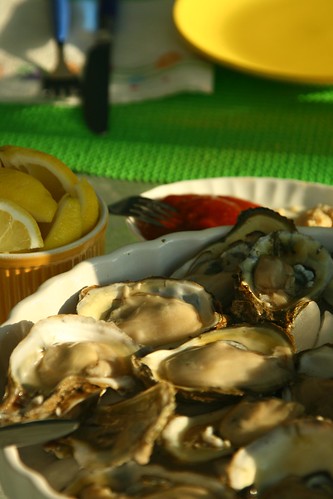
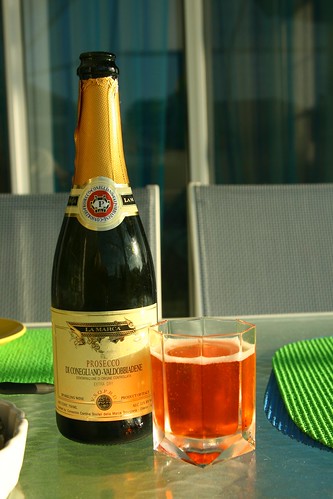
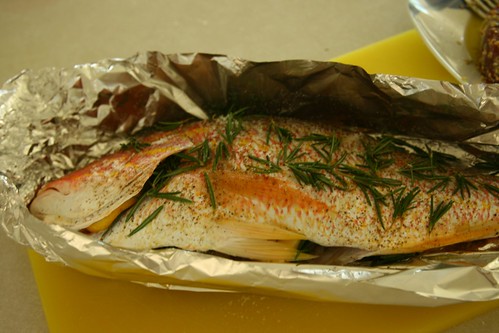
This is a set of photos I had taken in early June, a meal my father and I had one night. We had, if I remember correctly, raw oysters as an appetizer with some prosecco and Aperol, a Campari like bitter liquor. Then we cooked an whole red sea bass with some lemon, rosemary and olive oil, a seared(raw) tune steak marinated with olive oil and wasabi, garlic mashed potatoes and brussel sprouts and a bottle of white wine for dinner.


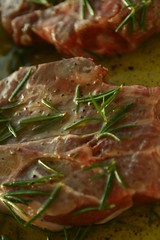
Also, as we always do, we started to prepare the next evenings dinner while the fish was cooking. Lamb steaks marinating in olive oil, lemon juice, rosemary, salt, and pepper.


Friday, April 18, 2008

La Cucina Italiana


Since 1929, La Cucina Italiana has called itself Italy's premier food and cooking magazine, and it is still a title that it deserves.

What most cooking magazines look like is simple, recipe after recipe after recipe, which can in fact get old and boring after a while. What Cucina does different however, is what makes them the only cooking magazine I will purchase month after month without ever opening the cover at the news stand.

By having stories, tours, profiles on chefs and Italian cities that are off the beaten path but with great culinary history, the magazines helps the reader dig deeper into the history and stories behind the food many people just eat to live. I like to think that I live to eat, but thats a different post.

My favorite story I have read so far was one about polenta, the peasant food eaten mostly in northern Italy. Arturo Zampaglione tells the story about how he grew up in Italy and he would make a big batch of polenta, pour it directly onto a large wooden board and then everyone eats off of the board, which is placed at the centre of the table. In the article, Zampaglione tells how he introduced his New York friends to this tradition by having a polenta dinner at his new apartment in New York City.

These traditions and stories are what to me makes a cooking magazine stand out, and give the reader more then just some recipes they probably already have in a cook book hidden on their shelves. I would think that the people who purchase cooking magazines probably have a deeper love for food then most people, so by having stories and experiences like this, it gives La Cucina Italiana the kick to make it such a better magazine.

Tuesday, April 15, 2008

Hearty Soup

The satisfaction on her family’s face after a bowl of her minestrone soup is what keeps Maria making it every time she has company over.

Since Maria Rindinella was a young woman, growing up all over the world in Italy, France and South Africa, she has loved a bowl of soup. So when it came, her mother taught her how to make an Italian classic, a minestrone soup.

To begin, she brings a pot of salted water to a boil, usually about 4-6 cups of water.

Once the salted water has boiled, she starts to add in vegetables. Usually Maria will add in a cut up potato, broccoli, cauliflower, peas, carrots, onions, a can of beans in tomato sauce, and most importantly a few stalks of fresh celery.

Maria explains that she doesn’t know why, but when her mother taught her the recipe, she stated that fresh celery stalks are key to the recipe. She also states that with the other vegetables, it does not matter if they are fresh or frozen, but she prefers to use frozen vegetables because it costs less for larger quantities.

“The vegetables in this soup are all versatile; you can add and subtract any for your own preference.” Maria says in her native Italian tongue.

The vegetables will cook in the water for about 30 minutes, or until the potatoes have cooked. Once they are soft enough to pierce with a fork, turn down the heat and let it simmer for a little while longer.

While the vegetables simmer in the water, put another pot of salted water on to boil. Once this water has boiled, she puts in some pasta.

Maria keeps a close watch on the pasta as she stirs the vegetables, because she likes to take the past out of the water before it is fully cooked, because later on it will finish cooking in the soup broth.

After the water seems to of absorbed the tastes of the vegetables, using either a hand blender or food processor, mix all the vegetables together, creating a thick broth, or as she calls it in Italian, brodo.

If using a food processor, it is best to puree the vegetables and water in small batches to avoid it seeping from the creases of the machine while it is pureeing.

Once all the water and vegetables has been turned into brodo, let it heat back up to a boil on the stove, then reduce heat to medium and add the pasta.

Let it sit for about ten minutes with the pasta in it, then serve in a bowl, accompanied with a piece of bread.

Eliseo Rindinella, Maria’s oldest son, puts his own twist on the soup by adding some extra virgin olive oil to his bowl of soup once it has been served.

Minestrone soup means big soup, according to Deborah Mele, a cook, who shares her love for Italian cooking online at italianfoodforever.com.

“There are as many different versions of minestrone as there are regions in Italy,” says Mele on her site.

“Puoi usare qualsiasi verdure che vuoi, e tutto a la vostra preferenza.” Maria says, “You can use any vegetable you like, it is all up to your preference.”

Saturday, April 12, 2008

Locatelli's Italy


One of my favorite genres to read is cultural and cookbooks. I have always loved reading about different cultures and ways of life of people all over the world and, if I can mix that with the food that said culture eats it makes the reading even better.

My favorite book like this is Giorgio Locatelli’s “Made in Italy: Food & Stories.” Through the books 625 pages, Locatelli gives the best view of Italy from a cultural and food stand.

Locatelli is an Italian born chef who has worked all over Paris, London and Italy for the past 25 years. He currently owns Locatelli in London. What he does through out his second cookbook is give the best description and view of Italians love for food.

What makes this book so excellent in my view is the stories that accompany the recipes. Locatelli offers informative essays on Italian foods such as tomatoes, cheeses, mushrooms, risotto, buffalo mozzarella, and many more. These essays give the reader an even better view into why Italians love their food and fresh ingredients so much.

The essays however don’t only cover ingredients, he also writes personal stories of growing up and eating at his Nona’s (Grandmother’s) kitchen table and his Uncle’s restaurant in the next town over. These essays give an insight into why Locatelli is so passionate about food and cooking, which was obviously kindled at a young age.

Although the book is a little pricey at $75 Canadian, it is definitely a cookbook that anyone who loves Italian food should own, use and read from cover to cover because it is an honest and great look into Italian food and culture.

Friday, April 11, 2008

Spring time pasta

I love to eat. My body might not look like it. I’m lucky, but food is one thing I don’t stop thinking about. Eating is a necessity, so I think people should make the most of it, and eat great food. I certainly try to as much as I can. Nothing puts me in a better mood then spending an evening, or any time, with my family and/or friends around a table, or kitchen, with some food and drinks talking.

One thing I love about food is that different seasons mean totally different dishes. Spring and fall are my favorite times. Great produce becomes available and can easily be cooked to produce simple dishes with amazing flavors.

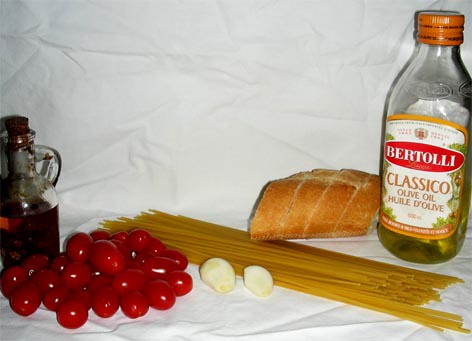
Once spring comes, and the sun begins to shine, and evenings warm up enough to eat dinner outside on a patio, my favorite dish to prepare is Spaghetti Pomodorini (spaghetti with baby tomatoes).


My father taught me how to make this simple, yet flavorful, dish. It doesn’t require many ingredients. You probably already have most around your kitchen.


Ingredients:

2 cloves of garlic
Small tub of tomatoes (I like cherry or grape tomatoes)
Enough spaghetti for two
Fresh basil leaves
Olive oil
Bread
Parmiggiano-Reggiano cheese
Salt
Pepper


Optional:
Pepper flakes or spicy olive oil (how to make oil at home below)

How to make:

  • Bring a large pot of salted water to boil. Add spaghetti and cook for a few minutes less then the packages directions.
  • Meanwhile, cut tomatoes in half and place them cut side down in a sauce pan with olive oil in it. Crush the cloves of garlic and toss in. Also, add some pepper flakes or a few drops of the spicy olive oil if desired. Heat the tomatoes and garlic on med heat, covered, for about 3-5 minutes.
  • Take the lid off the tomatoes, and crush the tomatoes, while in the pan, so it becomes tomato skins with the juice and seeds as a sauce. Leave uncovered and let the tomato juices cook down.
  • Take one ladle full of the water the pasta is cooking in, and add it to the pan with the tomatoes and garlic. Turn the heat on the tomato and water to high. (Mixing in the water brings some of the starch from the pasta into the sauce, and helps the sauce stick to the pasta better.)
  • Remove crushed garlic cloves and discard.
  • Remove the spaghetti from the water, and toss it in the pan with the sauce.
  • Mix the spaghetti and sauce together on high in the pan for a minute or two, to finish cooking it.
  • Serve in a bowl, and grate some Parmiggiano-Reggiano cheese on top, and tear some basil leaves on top of the pasta.
  • Serve, with a slice of bread, and enjoy with the beautiful weather that comes with spring time.

To make the spicy olive oil:
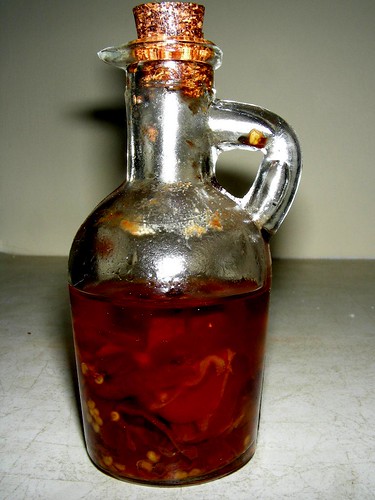
Put some diced Jamaican peppers, pepper flakes, and any other hot pepper in a small jar or container, cover with extra-virgin olive oil, and let it sit for a week. After a week, it is ready to use. Pour a few drops on some pasta, meats, pizza’s, but be careful, a few drops is usually enough.

This oil has been sitting on my counter for about six months now, and is the spiciest I have made. I generally add a new red Jamaican pepper once a month.

Bon Apetito!